The Pallas Cat: A Exploration of the Manul, Cutest Wild cat - What is the pallas cat?
Introduction:

Nestled amidst the rugged landscapes of Central Asia lies a creature shrouded in mystery and intrigue—the Pallas cat (Otocolobus manul). With its distinctive appearance and elusive nature, this felid species, also known as the Manul, stands as a testament to the captivating diversity of the natural world. In this comprehensive exploration, we embark on a journey to unravel the enigmatic life of the Pallas cat, delving into its unique adaptations, ecological significance, conservation challenges, and cultural significance across its vast range.
BASIC INFORMATION:

POPULATION SIZE: LIFE SPAN:
58,000~ 8-12~ Years
Weight: LENGTH:
2.5-4.5 KG/ 46-65 CM/
5.5-9.5 LBS 18.1-25.6 INCH
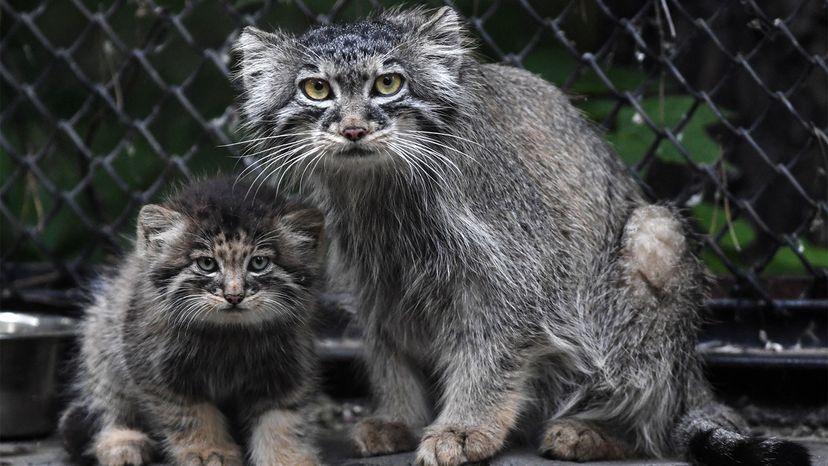
The Pallas's cat (Otocolobus manul) is a small wild cat well camouflaged and adapted to the cold continental climate in its native range.
Physical Characteristics:

The Pallas cat's appearance is characterized by a striking blend of features that set it apart from its feline counterparts. With a stocky build, short legs, and a dense, plush coat adorned with distinctive markings, including dark bars and spots, the Manul boasts a captivating allure. Its large, expressive eyes, framed by prominent facial ruffs, lend an air of mystique to this elusive creature, further enhancing its appeal as an icon of the wild. The coat's coloration varies across its range, ranging from pale gray to rusty brown, allowing it to blend seamlessly with its surroundings.
Habitat and Distribution:

Native to the steppes, grasslands, and rocky terrain of Central Asia, the Pallas cat inhabits a diverse range of ecosystems, including montane regions, semi-arid deserts, and scrublands. From the grasslands of Mongolia and China to the rocky slopes of Russia and Iran, this elusive felid species navigates a mosaic of habitats, adapting to varying environmental conditions with remarkable resilience. Despite its widespread distribution, the Pallas cat's secretive nature renders it a seldom-seen inhabitant of its native landscapes, making it a challenge for researchers to study in the wild.
Ecological Role and Behavior:
.png) As an apex predator within its ecological niche, the Pallas cat plays a crucial role in maintaining the balance of its ecosystem. Preying primarily on small mammals, birds, and insects, it serves as a vital regulator of prey populations, exerting subtle yet significant influences on the dynamics of its environment. Despite its solitary tendencies, the Manul exhibits a complex array of behaviors, including scent-marking, territorial defense, and vocalizations, which serve to communicate with conspecifics and assert dominance within its territory. The Manul is also known for its elusive nature, often avoiding contact with humans and other potential threats.
As an apex predator within its ecological niche, the Pallas cat plays a crucial role in maintaining the balance of its ecosystem. Preying primarily on small mammals, birds, and insects, it serves as a vital regulator of prey populations, exerting subtle yet significant influences on the dynamics of its environment. Despite its solitary tendencies, the Manul exhibits a complex array of behaviors, including scent-marking, territorial defense, and vocalizations, which serve to communicate with conspecifics and assert dominance within its territory. The Manul is also known for its elusive nature, often avoiding contact with humans and other potential threats.Adaptations for Survival:

The Pallas cat's survival is facilitated by a suite of specialized adaptations finely tuned to its harsh and unforgiving environment. Its thick, insulating fur protects against extreme temperatures, while its low-slung body and short legs enable agile movements across rugged terrain. Furthermore, the Manul's keen sense of hearing and exceptional camouflage render it a formidable hunter, capable of ambushing prey with stealth and precision amidst the sparse vegetation of its arid habitats. Its large, tufted ears not only enhance its hearing but also aid in thermoregulation, helping dissipate excess heat during hot summers and retain warmth in the cold winters of its native range.
Conservation Status and Threats:

Despite its intrinsic ecological value, the Pallas cat faces a myriad of conservation challenges, threatening its long-term survival. Habitat loss and fragmentation due to agricultural expansion, mining activities, and infrastructure development pose significant threats to the species, leading to the degradation of its natural habitat and the isolation of populations. Additionally, Manul is often targeted by poachers for its fur and body parts, which are used in traditional medicine and the illegal wildlife trade. Human-wildlife conflict also poses a threat, as Manul occasionally preys on domestic livestock, leading to retaliatory killings by local communities. Climate change further exacerbates these threats, altering the distribution of prey species and disrupting the Manul's natural habitat.
Cultural Significance and Conservation Efforts:
Beyond its ecological role, the Pallas cat holds cultural significance for indigenous communities across its range, featuring prominently in folklore, traditional art, and spiritual beliefs. In Mongolia, for example, the Manul is revered as a symbol of wisdom and strength, with its image depicted in traditional textiles and handicrafts. Recognizing the importance of conserving this iconic species, numerous organizations and government agencies are working tirelessly to protect the Pallas cat and its habitat. Conservation efforts include habitat restoration, community-based conservation initiatives, anti-poaching patrols, and research projects aimed at better understanding the species' ecology and behavior.
Conclusion:

In conclusion, the Pallas cat stands as a symbol of resilience and adaptation in the face of adversity, embodying the spirit of wildness that defines the untamed landscapes of Central Asia. As stewards of our planet's biodiversity, we must prioritize the conservation of this enigmatic species, ensuring that future generations have the opportunity to marvel at its beauty and appreciate its ecological significance. Through concerted efforts in habitat protection, community engagement, and scientific research, we can secure a brighter future for the Pallas cat, preserving its rightful place in the tapestry of life for generations to come.


Comments
Post a Comment
if you like my content or have any suggestions then please comment