Life of the Red Panda: A Exploration of a Fascinating Species called Red Panda - What is a Red Panda? Everything you need to know about Red Panda
Introduction:
 The red panda, scientifically recognized as Ailurus fulgens and affectionately known as the "firefox" or "lesser panda," captivates the imagination with its endearing charm and unique ecological niche. Originating from the eastern Himalayas and southwestern China, this elusive creature stands as a testament to nature's boundless creativity, boasting a taxonomic distinction within the Ailuridae family that underscores its evolutionary singularity.
Habitat and Ecological Niche:

Delving into the intricacies of the red panda's habitat unveils a world teeming with biodiversity and ecological complexity. Predominantly found in cool temperate montane forests, characterized by dense bamboo thickets, the red panda's habitat spans elevations ranging from 6,000 to 13,000 feet. Within this verdant realm, a mosaic of rolling hills, steep slopes, and luxuriant undergrowth provides essential resources, including shelter, sustenance, and refuge from potential predators.
Dietary Specialization and Adaptations:
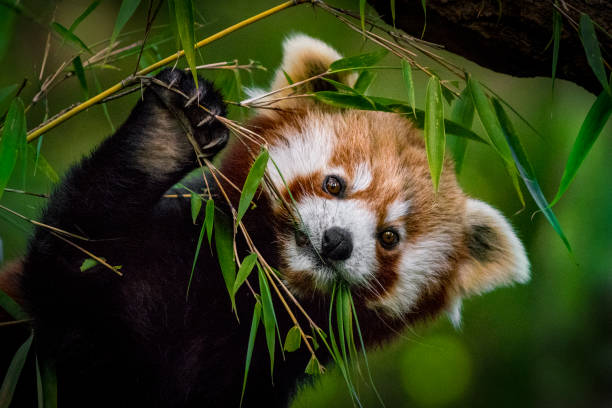
At the heart of the red panda's survival lies its specialized dietary preferences, with bamboo emerging as the cornerstone of its nutritional ecology. Bamboo shoots and leaves constitute approximately 90% of their diet, presenting unique challenges due to the plant's low caloric density and fibrous composition. To overcome these nutritional hurdles, red pandas have evolved remarkable adaptations, notably the presence of a modified radial sesamoid bone, colloquially termed the "false thumb." This evolutionary innovation grants them unparalleled dexterity in grasping bamboo stems, facilitating efficient feeding strategies vital for their survival in bamboo-rich ecosystems.
Ecosystem Dynamics and Conservation Challenges:

Despite their ecological resilience, red pandas face an array of conservation challenges stemming from human-induced environmental disturbances. Deforestation, habitat fragmentation, and climate change represent imminent threats to their continued existence, exacerbating the vulnerability of these enchanting creatures. Conservation efforts aimed at mitigating these challenges are underway, yet the magnitude of the task necessitates sustained global cooperation and proactive measures to safeguard the red panda's future and preserve the integrity of its natural habitats.
Behavioral Ecology and Social Dynamics:
Reproductive Strategies and Familial Bonds:

During the breeding season, red pandas exhibit subtle shifts in behavior, with occasional social interactions punctuating their otherwise solitary existence. Female red pandas retreat to secluded dens adorned with leaf litter to give birth to litters comprising one to four cubs, nurturing familial bonds crucial for the survival of their offspring. This period of parental care underscores the importance of intergenerational transmission of behavioral traits and ecological knowledge, ensuring the perpetuation of their species across generations.
Conclusion:

In conclusion, the red panda emerges as a quintessential embodiment of nature's ingenuity and adaptability, epitomizing the intricate interplay between evolutionary specialization and ecological resilience. As custodians of our planet's biodiversity, it is incumbent upon us to redouble our efforts in conserving their habitats, mitigating the pernicious impacts of anthropogenic activities, and fostering a collective ethos of environmental stewardship. Only through concerted action can we secure a future where the red panda thrives, captivating generations to come with its enduring presence amidst the kaleidoscopic tapestry of our natural world.


Comments
Post a Comment
if you like my content or have any suggestions then please comment